Introduction
Injection techniques are among the most fundamental clinical skills taught in nursing and healthcare education. Healthcare professionals must administer injections safely and accurately to ensure effective treatment and protect patient well-being. Because injections involve precise techniques and careful handling of equipment, proper training is essential for students before they perform procedures in real clinical settings.
To support safe learning, many educational institutions now use simulation equipment to teach injection techniques. These tools provide a realistic and controlled environment where students can practice repeatedly, gain confidence, and master the correct methods of administering injections.
What Is Injection Simulation Equipment?
Injection simulation equipment refers to specialized training devices designed to mimic the human body for practice purposes. These tools often include injection pads, anatomical models, or training arms that replicate skin texture and muscle layers.
The purpose of simulation equipment is to help students understand how injections are administered without risking patient safety.
Common types of injection training tools include:
- Injection practice pads
- Training arms for intravenous and intramuscular injections
- Anatomical models for subcutaneous injection practice
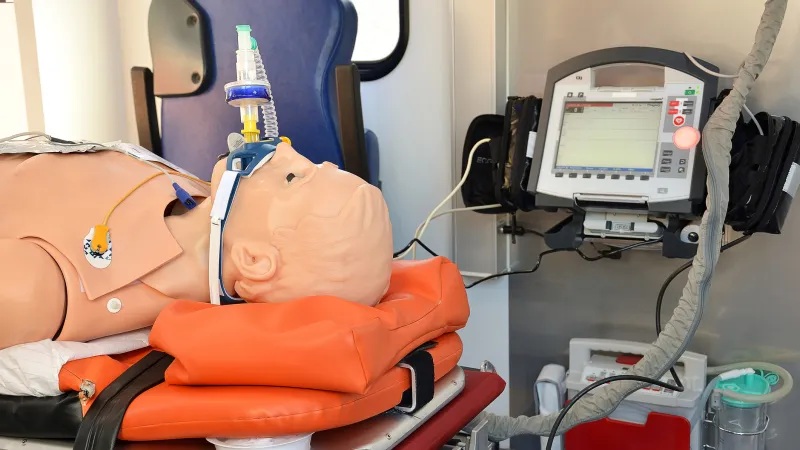
- Simulation mannequins with multiple injection sites
These tools provide a realistic learning experience and allow students to practice clinical procedures safely.
Understanding Different Injection Types
Before practicing injections, students must learn the differences between the main types of injections used in healthcare. Simulation equipment helps students understand these techniques through guided training sessions.
The most common injection types taught in nursing programs include:
1. Intramuscular injections (IM)
Delivered deep into the muscle tissue
2. Subcutaneous injections (SC)
Administered into the fatty layer beneath the skin
3. Intradermal injections (ID)
Injected just under the surface of the skin
Each injection type requires a different needle angle, depth, and technique. Simulation tools allow students to practice these variations in a controlled environment.
Practicing Proper Injection Techniques
Simulation equipment allows students to practice the correct steps involved in administering injections. This hands-on training helps them develop both technical skills and procedural knowledge.
Students can practice important steps such as:
- Selecting the correct injection site
- Cleaning the area using sterile techniques
- Holding the syringe properly
- Inserting the needle at the correct angle
- Injecting medication slowly and safely
By repeating these steps multiple times, students gain familiarity with the procedure and improve their precision.
Reducing Anxiety for New Learners
Many students feel nervous when performing injections for the first time, especially when working with real patients. Simulation equipment helps reduce this anxiety by providing a safe space for learning.
Using simulation tools allows students to:
- Practice injections without fear of harming patients
- Learn from mistakes during training sessions
- Receive guidance and feedback from instructors
As students gain experience with simulation models, their confidence increases. This confidence helps them perform procedures more effectively during clinical practice.
Improving Safety and Accuracy
Patient safety is a top priority in healthcare education. Improper injection techniques can lead to complications such as infections, nerve damage, or incorrect medication delivery.
Simulation equipment helps students develop the skills needed to avoid these risks.
Training with simulation tools helps students:
- Understand proper needle placement
- Maintain sterile procedures
- Follow correct dosage and administration steps
- Recognize common mistakes and correct them early
These skills are essential for ensuring safe and effective patient care.
Conclusion
By integrating simulation equipment into training programs, healthcare institutions can ensure that future professionals are well equipped to perform injection procedures with skill, confidence, and precision.